Fire Retardant Fabric: Which Natural Fibers Resist Flame and How Long Does FR Treatment Last?
Fire retardant fabric comes from two very different starting points: fibers that resist flame naturally, and ordinary fabric that has been chemically treated to gain that same protection. Buyers sourcing safety textiles often want to know which route gives longer-lasting performance — do certain natural fibers already resist fire on their own, and if a fabric is chemically treated, how long can you actually rely on that protection before it needs to be renewed? This guide answers both questions in detail, using the same manufacturing and testing knowledge we apply to every roll of fire retardant fabric we produce.
As a Shenzhen-based manufacturer and exporter specializing in fireproof and waterproof technical textiles, we produce fire retardant fabric for tarps, machine covers, protective curtains, and insulation mats used across industrial and construction safety applications worldwide. Every point below reflects the materials, chemistry, and testing standards we work with in daily production.
Table of Contents
- Natural Fiber vs. Chemically Treated Fire Retardant Fabric
- Which Natural Fibers Are Naturally Flame Resistant?
- How Long Does FR Chemical Treatment Last on Fabric?
- Comparison Table: Natural vs. Treated Fire Retardant Fabric
- How to Extend the Life of FR-Treated Fabric
- Common Applications of Fire Retardant Fabric
- How to Choose the Right Fire Retardant Fabric Supplier
- FAQ: Fire Retardant Fabric
Natural Fiber vs. Chemically Treated Fire Retardant Fabric
Before comparing specific fibers and treatments, it helps to understand the two broad categories of fire retardant fabric on the market. The first category is inherently flame resistant fabric, made from fibers whose chemical structure already resists ignition — no coating or treatment is required for the fire-resistant property to exist. The second category is chemically treated fire retardant fabric, where a standard fiber (often cotton, polyester, or a blend) is processed with flame retardant chemicals after weaving to add fire resistance that was not originally present in the fiber.
Both approaches are widely used in industrial tarps, curtains, and protective covers, and each has a different durability profile — which is exactly why the two outline questions below matter so much to buyers planning long-term use.
Which Natural Fibers Are Naturally Flame Resistant?
While most natural fibers burn relatively easily on their own, a small number of natural and near-natural fibers have inherent flame resistance due to their chemical composition, moisture content, or fiber density. Here are the natural fibers most commonly recognized for natural flame resistance:
1. Wool
Wool is one of the most naturally flame resistant common textile fibers. It has a relatively high ignition temperature, does not melt or drip when exposed to flame, and tends to self-extinguish once the ignition source is removed. Wool’s natural moisture content and its protein-based (keratin) structure also help slow combustion. This is why wool blends are frequently used in protective blankets and industrial safety garments.
2. Silk
Like wool, silk is a protein-based natural fiber that resists ignition better than plant-based fibers such as cotton. Silk chars rather than melts, and it has a relatively slow burn rate compared to synthetic fibers. However, silk’s cost and lower abrasion resistance make it less common for heavy-duty industrial fire retardant fabric applications.
3. Mineral and Inorganic Fibers (Historical Note)
Mineral-based fibers such as asbestos were historically used for their extreme fire resistance, but asbestos is now banned or heavily restricted in most countries due to serious health hazards. Modern industrial fire retardant fabric relies on safer alternatives, including inherently flame resistant synthetic fibers such as aramid (Nomex, Kevlar) and modacrylic, which offer asbestos-level fire performance without the associated health risks.
4. Cotton and Other Cellulose Fibers
Cotton, linen, and other cellulose-based natural fibers are not naturally flame resistant — in fact, cotton burns readily and continues to burn after the ignition source is removed. However, cotton is one of the most common base fabrics used for chemical FR treatment, because its fiber structure absorbs flame retardant chemical formulations well, producing durable and cost-effective treated fire retardant fabric for tarps and covers.
In practice, most industrial-grade fire retardant fabric today blends the advantages of natural fiber comfort or cost with synthetic inherent fibers or chemical treatments, rather than relying on a purely natural fiber solution — because natural fibers alone rarely meet the strict flame spread and afterflame requirements of ASTM and NFPA testing on their own.
How Long Does FR Chemical Treatment Last on Fabric?
This is one of the most practical questions for any buyer relying on chemically treated fire retardant fabric, because the answer directly affects replacement schedules, maintenance planning, and safety compliance. The honest answer: it depends on the type of FR treatment, the fabric’s exposure conditions, and how the fabric is cleaned and maintained.
Durable FR Treatment vs. Non-Durable FR Treatment
FR chemical treatments generally fall into two categories:
- Durable (permanent) FR treatment — the flame retardant chemical bonds chemically to the fiber during a high-temperature curing process, becoming a semi-permanent part of the fabric structure. Durable treatments are formulated to withstand repeated washing, UV exposure, and outdoor weathering for an extended service life, often rated for the useful lifespan of the product itself (commonly several years under normal industrial use).
- Non-durable (temporary) FR treatment — the flame retardant chemical sits more on the surface of the fiber rather than bonding into it. This type of treatment can wash out, wear off through friction, or degrade significantly faster, sometimes within a single wash cycle or a few months of heavy outdoor exposure.
For industrial products like fire-retardant tarps, machine covers, and protective curtains, durable FR treatments are strongly preferred, since these products are rarely washed indoors and must maintain performance through months or years of outdoor weather, UV exposure, and physical wear.
Key Factors That Affect FR Treatment Lifespan
- UV exposure — prolonged sunlight can gradually break down flame retardant chemical bonds, especially on outdoor tarps and covers.
- Washing and cleaning method — harsh detergents, high-heat washing, or repeated laundering can strip non-durable treatments faster than expected.
- Abrasion and mechanical wear — friction from wind, contact with equipment, or repeated folding can wear down the surface layer where treatment chemicals reside.
- Chemical exposure — contact with oils, solvents, or certain industrial chemicals can interact with and degrade some FR treatments.
- Coating protection — a PVC, PU, or PE coating layered over treated fabric helps shield the FR chemistry from UV and moisture, extending its effective lifespan considerably.
How to Verify FR Treatment Is Still Effective
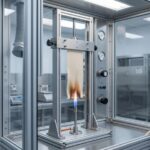
For critical applications, periodic flame testing (such as a small-scale vertical flame test) or supplier-provided retesting can confirm whether treated fire retardant fabric still meets its original flame retardant rating. Many industrial buyers schedule replacement or retesting on a set cycle (commonly every 1–3 years for outdoor products) rather than waiting for visible signs of wear, since flame retardant degradation is not always visible to the eye.
Comparison Table: Natural vs. Treated Fire Retardant Fabric
| Fiber / Treatment Type | Flame Resistance Source | Typical Lifespan of FR Property | Best Use Case |
|---|---|---|---|
| Wool | Inherent (natural fiber) | Life of the garment/fabric | Protective blankets, safety garments |
| Silk | Inherent (natural fiber) | Life of the fabric | Light protective linings (limited industrial use) |
| Aramid (Nomex/Kevlar) | Inherent (synthetic fiber) | Life of the product | Welding blankets, high-heat curtains |
| Durable FR-Treated Polyester/Cotton | Chemically bonded treatment | Several years under normal use | Fire retardant tarps, machine covers |
| Non-Durable FR-Treated Fabric | Surface-applied treatment | Months to ~1 year, shorter with washing/UV | Temporary or indoor low-exposure use only |
| Coated FR Fabric (PVC/PU/PE over treated base) | Chemical treatment + protective coating | Extended (coating shields treatment from UV/moisture) | Outdoor tarps, curtains, insulation mats |
How to Extend the Life of FR-Treated Fabric
- Choose fabric with a durable, chemically bonded FR treatment rather than a surface-applied one for any outdoor or long-term application.
- Select products with a protective coating or lamination (PVC, PU, or PE) to shield the FR chemistry from UV and moisture.
- Avoid harsh detergents, high-heat washing, or aggressive cleaning chemicals that are not specified as safe for FR-treated textiles.
- Store fabric properly when not in use, avoiding prolonged direct sun exposure or contact with oils and solvents.
- Schedule periodic inspection or retesting for mission-critical applications rather than relying on visual inspection alone.
Common Applications of Fire Retardant Fabric
Whether inherently flame resistant or chemically treated, fire retardant fabric is used wherever flammable materials, sparks, or high-heat processes are present, including:
- Fire-retardant tarps for covering machinery, construction materials, and flammable stock
- Welding curtains and screens to contain sparks and UV radiation
- Protective machine covers for CNC equipment, generators, and outdoor tools
- Insulation mats and blankets for pipe, tank, and equipment protection
- Temporary enclosures and containment barriers on construction sites
- Warehouse and storage covers for flammable or high-value inventory
How to Choose the Right Fire Retardant Fabric Supplier
Since FR performance and treatment durability vary widely between suppliers, buyers should evaluate potential partners on the following criteria:
- Treatment type transparency — ask whether the fabric uses a durable (bonded) or non-durable (surface) FR treatment, or an inherently flame resistant fiber.
- Test certification availability — request ASTM/NFPA test reports specific to the finished product, not just raw fiber data.
- Coating and lamination options — confirm whether a protective coating is available to extend treatment lifespan outdoors.
- OEM/ODM capability — the ability to customize fiber type, coating, size, and finishing for your specific project.
- Manufacturing consistency — factory-direct suppliers with in-house quality control reduce batch-to-batch variation in FR performance.
FAQ: Fire Retardant Fabric
Are there any 100% natural fire retardant fabrics?
Wool and silk are the most commonly cited naturally flame resistant natural fibers, but on their own they rarely meet strict industrial ASTM or NFPA flame spread requirements. Most industrial-grade fire retardant fabric blends natural comfort or cost benefits with inherent synthetic fibers or chemical treatment to reach required performance levels.
Does washing remove FR chemical treatment from fabric?
It depends on the treatment type. Durable (bonded) FR treatments are designed to withstand repeated washing, while non-durable (surface-applied) treatments can wash out much faster, sometimes within just a few wash cycles.
How often should FR-treated fabric be replaced?
For outdoor industrial products such as tarps and covers, many buyers replace or retest FR-treated fabric every 1–3 years, depending on exposure conditions, treatment type, and whether a protective coating is present.
Is inherently flame resistant fabric better than chemically treated fabric?
Inherently flame resistant fabric (like aramid fibers) typically retains its protection for the life of the product and cannot wash out, but it is usually more expensive. Chemically treated fabric with a durable treatment and protective coating can offer strong, cost-effective performance for many industrial applications.
Can FR treatment be reapplied to extend fabric life?
In some cases, fabric can be re-treated with FR chemicals, though this is more common in textile processing facilities than in the field. For most industrial buyers, it is more practical to source fabric with durable treatment and protective coating from the start, or to plan replacement on a set schedule.
Need Long-Lasting Fire Retardant Fabric for Your Project?
At Xintex, we manufacture fire-retardant tarps, machine covers, protective curtains, and insulation mats using durable FR treatments and protective coatings engineered to meet ASTM and NFPA standards — built to perform in real outdoor and industrial conditions, not just on a lab test sheet. As a Shenzhen-based factory, we support OEM/ODM projects with custom fiber selection, coating, and finishing to match your specific application and expected service life.
Contact us today for a fire retardant fabric quote, sample request, or technical data sheet — and let’s build a safer, more durable supply solution together.