How Is Flame Retardant Fabric Made? A Complete Manufacturing Guide
Fire retardant fabric doesn’t start out fire resistant — it is engineered to become that way through a specific combination of fiber selection, chemical treatment, and finishing processes. If you are sourcing tarps, machine covers, curtains, or insulation materials for industrial and construction safety, understanding how fire retardant fabric is actually manufactured will help you evaluate suppliers, compare quality, and choose the right product for your application. In this guide, we break down the full production process step by step, based on the methods and standards we use every day as a manufacturer of fireproof and waterproof technical textiles.
As a Shenzhen-based manufacturer and exporter, we produce fire retardant fabric for fire-retardant tarps, machine covers, protective curtains, and insulation mats used across industrial and construction safety applications worldwide, with every material tested to meet ASTM and NFPA standards. Below is a detailed look at exactly how that fabric gets made, from raw fiber to finished, certified product.
Table of Contents
- Overview: Two Paths to Fire Retardant Fabric
- Step 1 — Selecting the Base Fiber
- Step 2 — Choosing the Flame Retardant Method
- Step 3 — Applying the Flame Retardant Treatment
- Step 4 — Drying and Curing
- Step 5 — Coating and Lamination
- Step 6 — Finishing: Cutting, Sealing, and Hardware
- Step 7 — Flame Testing and Quality Control
- The Chemistry Behind Flame Retardant Fabric
- Manufacturing Method Comparison Table
- Common Applications of Fire Retardant Fabric
- How to Evaluate a Fire Retardant Fabric Manufacturer
- FAQ: How Fire Retardant Fabric Is Made
Overview: Two Paths to Fire Retardant Fabric
Every piece of fire retardant fabric is produced through one of two fundamental approaches, and understanding this distinction is the key to understanding the entire manufacturing process:
- Inherent flame resistance — the fiber itself is chemically flame resistant before it is even woven into fabric (examples: aramid, modacrylic).
- Chemically treated (topical) flame resistance — a standard fiber such as polyester or cotton is woven first, then treated afterward with flame retardant chemicals to add fire resistance that was not originally present.
Most industrial fire retardant fabric used for tarps, machine covers, and protective curtains follows the second path, because it is more cost-effective at scale and allows manufacturers to combine flame resistance with waterproofing, UV resistance, and durability through additional coating layers. The step-by-step process below focuses primarily on this chemically treated and coated manufacturing route, since it represents the majority of industrial fire retardant fabric production.
Step 1 — Selecting the Base Fiber
The manufacturing process begins with choosing a base fabric. Common choices include:
- Polyester — strong, dimensionally stable, and widely used as a base for coated fire retardant fabric.
- Cotton or cotton-poly blends — absorb flame retardant chemical treatments well and offer good comfort and drape.
- Nylon — high tensile strength, often used where abrasion resistance is critical.
- Inherently flame resistant fibers (aramid, modacrylic) — selected when permanent, non-washable-out fire resistance is required, typically for higher-heat or safety-critical applications.
The fiber choice affects everything downstream: how well the fabric absorbs flame retardant chemicals, how it behaves under heat, and how compatible it is with later coating and lamination steps.
Step 2 — Choosing the Flame Retardant Method
Once the base fiber is selected, manufacturers decide on the flame retardant method to apply. The three most common industrial methods are:
Topical (Surface) Treatment
Flame retardant chemicals are applied to the surface of woven fabric. This is fast and cost-effective but generally offers a shorter effective lifespan unless a durable, bonded formulation is used.
Back-Coating
A flame retardant chemical compound, often combined with a binder, is applied specifically to the back side of the fabric. This is common for fabrics that need to maintain their original face-side appearance, texture, or color while still gaining fire resistance.
Fiber-Level (Inherent) Treatment
For inherently flame resistant fibers, the flame retardant property is built into the polymer during fiber production itself, before weaving even begins. No additional post-treatment is required for the base fire resistance, though coatings may still be added for waterproofing.
Step 3 — Applying the Flame Retardant Treatment
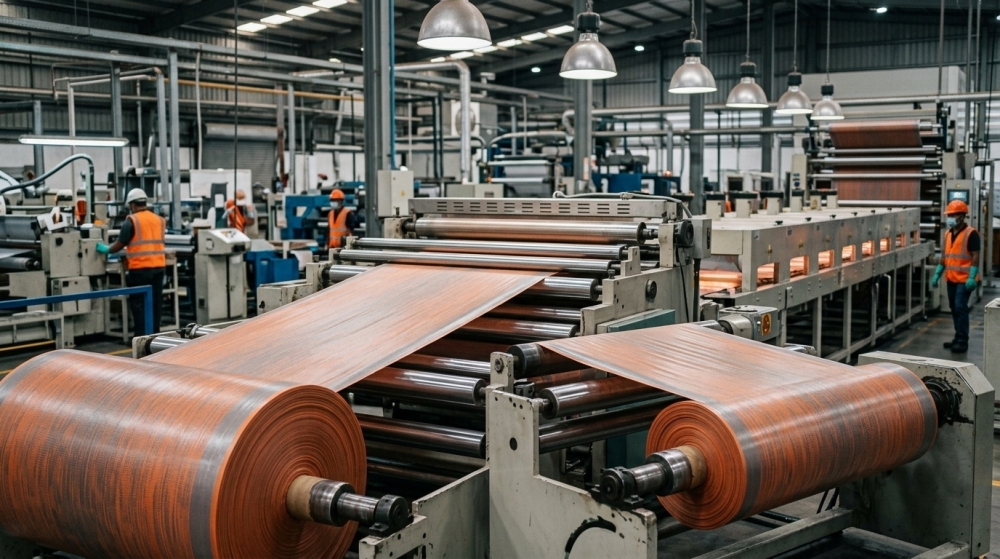
For chemically treated fire retardant fabric, the treatment is typically applied using a pad-dry-cure process:
- Padding/Dipping: The fabric is passed through a bath (or “pad”) containing a flame retardant chemical solution, ensuring the compound penetrates evenly across the fabric surface and, where needed, into the fiber structure.
- Squeezing/Mangling: Excess chemical solution is squeezed out through rollers to control the exact add-on percentage of flame retardant chemical, which directly affects flame performance and fabric hand-feel.
- Even Distribution Check: Quality control checks confirm the chemical is distributed uniformly, since uneven application can create weak points where flame resistance is reduced.
The flame retardant chemical systems used at this stage generally fall into three families: phosphorus-based compounds, nitrogen-based compounds, and halogen-free formulations, which are increasingly favored for their lower environmental and health impact compared to older halogenated chemistries.
Step 4 — Drying and Curing
After the flame retardant chemical is applied, the fabric moves through a drying and curing process, typically in a stenter frame or curing oven:
- Drying removes moisture from the padding process, usually at moderate temperatures.
- Curing uses higher heat (often in the range of 150–180°C, depending on the chemical system) to trigger a chemical reaction that bonds the flame retardant compound to the fiber. This curing step is critical — it is what transforms a temporary surface application into a durable, wash-resistant flame retardant finish.
Proper curing time and temperature control is one of the most important quality factors in flame retardant fabric manufacturing, since under-curing leaves the treatment weakly bonded (reducing durability), while over-curing can damage fiber strength or discolor the fabric.
Step 5 — Coating and Lamination
For products used outdoors — such as fire-retardant tarps, machine covers, and protective curtains — a coating or lamination layer is applied over the treated base fabric. Common coating materials include:
- PVC (Polyvinyl Chloride) — excellent waterproofing, abrasion resistance, and additional flame barrier properties.
- PU (Polyurethane) — lighter weight, flexible, good for curtains and covers requiring a softer hand-feel.
- PE (Polyethylene) — cost-effective, commonly used for general-purpose tarps and covers.
This coating is applied through knife-coating, calendering, or lamination processes, bonding an even layer of protective material across the fabric surface. Beyond reinforcing flame resistance, this step is what gives fire retardant fabric its waterproof, UV-resistant, and weatherproof performance for long-term outdoor use.
Step 6 — Finishing: Cutting, Sealing, and Hardware
Once the coated fire retardant fabric is complete, it moves into product finishing:
- Cutting to the required panel size for tarps, covers, or curtains.
- Heat-sealing or stitching of edges and seams, often using hot-air or high-frequency welding for coated fabrics to maintain waterproof seams.
- Reinforcement with webbing along edges and corners for added strength.
- Hardware installation, such as grommets, D-rings, or Velcro closures, depending on the intended application.
Step 7 — Flame Testing and Quality Control
Before any fire retardant fabric product is approved for shipment, it goes through rigorous testing, including:
- Vertical flame test — measuring char length, afterflame time, and afterglow time.
- Surface burning characteristics test — evaluating flame spread and smoke development.
- Waterproof rating tests — confirming coating performance under hydrostatic pressure.
- Tensile and tear strength tests — ensuring the fabric holds up under real-world mechanical stress.
These tests are typically run against ASTM (such as ASTM D6413 and ASTM E84) and NFPA (such as NFPA 701) standards, and reputable manufacturers retain test reports and certificates that buyers can request before purchase.
The Chemistry Behind Flame Retardant Fabric
At a molecular level, flame retardant treatments work through one or more of these mechanisms:
- Char formation — the treated fiber forms a protective carbon char layer when exposed to heat, insulating the material underneath and slowing further combustion.
- Gas-phase inhibition — some flame retardant chemicals release non-flammable gases that dilute oxygen near the flame, interrupting the combustion reaction.
- Heat absorption — certain compounds absorb thermal energy during decomposition, slowing the temperature rise of the fabric and delaying ignition.
Understanding this chemistry helps explain why fire retardant fabric is described as flame resistant rather than fireproof — these mechanisms slow and limit combustion rather than making the material completely immune to fire.
Manufacturing Method Comparison Table
| Manufacturing Method | Base Fiber | Process | Durability | Typical Products |
|---|---|---|---|---|
| Fiber-Level (Inherent) | Aramid, modacrylic | Flame resistance built into polymer before weaving | Life of the product | Welding blankets, high-heat curtains |
| Pad-Dry-Cure Topical Treatment | Polyester, cotton, blends | Chemical bath, drying, high-heat curing | Several years (durable formulations) | Tarps, covers, curtains |
| Back-Coating | Polyester, nylon | Chemical applied to fabric back side with binder | Medium to long, depends on binder | Curtains, decorative-facing covers |
| Coating/Lamination (PVC, PU, PE) | Any treated or inherent base | Knife-coating, calendering, or lamination over base fabric | Extended (protects underlying FR treatment) | Outdoor tarps, machine covers, insulation mats |
Common Applications of Fire Retardant Fabric
The manufacturing method used often depends on the fabric’s intended application. Common uses of fire retardant fabric include:
- Fire-retardant tarps for covering machinery, construction materials, and flammable stock
- Welding curtains and screens to contain sparks and UV radiation
- Protective machine covers for CNC equipment, generators, and outdoor tools
- Insulation mats and blankets for pipe, tank, and equipment protection
- Temporary enclosures and containment barriers on construction sites
- Warehouse and storage covers for flammable or high-value inventory
How to Evaluate a Fire Retardant Fabric Manufacturer
Since manufacturing quality directly determines how well fire retardant fabric performs in the field, buyers should evaluate suppliers on:
- Process transparency — a manufacturer should be able to explain whether their fabric uses inherent fiber, topical treatment, back-coating, or a combination.
- In-house testing capability — factories with in-house flame testing equipment can catch quality issues before shipment rather than relying solely on third-party batch testing.
- Certification documentation — ASTM/NFPA test reports specific to the finished product, not just raw fiber data.
- Coating and lamination options — availability of PVC, PU, or PE coating for outdoor durability.
- OEM/ODM capability — the ability to customize base fiber, treatment type, coating, and finishing hardware for your specific project.
FAQ: How Fire Retardant Fabric Is Made
What chemicals are used to make flame retardant fabric?
Common flame retardant chemical systems include phosphorus-based, nitrogen-based, and halogen-free formulations, which react to heat by forming a protective char layer, releasing flame-inhibiting gases, or absorbing thermal energy to slow combustion.
Is flame retardant fabric made differently for tarps versus curtains?
The core flame retardant treatment process is similar, but tarps typically receive a heavier PVC or PE coating for waterproofing and abrasion resistance, while curtains may use a lighter PU coating or back-coating to maintain flexibility and drape.
Does the manufacturing process affect how long flame resistance lasts?
Yes. Fabric produced with a proper pad-dry-cure process and a protective coating layer generally retains flame resistance far longer than fabric with a lightly applied surface treatment and no coating protection.
Can flame retardant fabric be made without chemical treatment?
Yes — fabric made from inherently flame resistant fibers such as aramid or modacrylic does not require chemical treatment, since the flame resistance is built into the fiber itself during production.
How can I confirm a fabric was manufactured to meet fire safety standards?
Ask the manufacturer for test reports referencing standards such as ASTM D6413, ASTM E84, or NFPA 701, and confirm the tests were performed on the actual finished product rather than only the raw fiber.
Looking for a Certified Fire Retardant Fabric Manufacturer?
At Xintex, we manufacture fire-retardant tarps, machine covers, protective curtains, and insulation mats using controlled pad-dry-cure treatment, PVC/PU/PE coating, and in-house flame testing to meet ASTM and NFPA standards — with full process transparency for every order. As a Shenzhen-based factory, we support OEM/ODM projects with custom base fiber selection, treatment type, coating, and finishing hardware to match your exact application.
Contact us today for a fire retardant fabric quote, sample request, or technical data sheet — and let’s build a safer, more reliable supply solution together.